

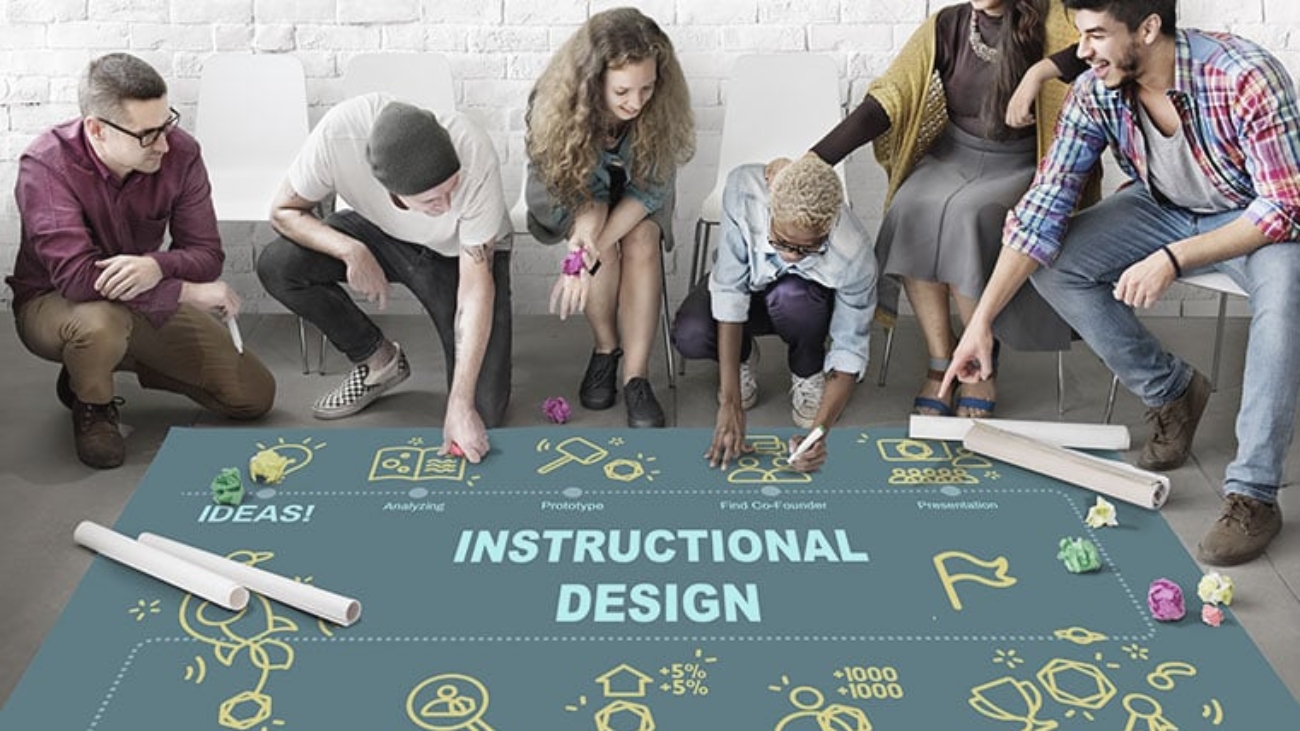
More and more companies are choosing eLearning to train their employees and the pandemic context did nothing but to accelerate this trend. Big corporations open up new positions such as instructional designer or eLearning developer and start building in-house eLearning content. Some would say “so, what’s wrong with that?” – Well, it’s not about being wrong… It’s more about being right.
In traditional training, the trainer also has the role of monitoring the interest and involvement of the participants. They have the ability to adapt content and re-shape delivery. E-Learning, on the other hand, is “flat”; the content must be conceived as relevant and as engaging as possible from the beginning. And here the traps arise!
One of the most common and subtle pitfalls is to start building content by considering the features and tools that the course development software provides instead of considering the effectiveness of the chosen solution. More precisely, the designer builds the content based on the question “what type of interaction (that the software provides) is suitable for this content?” instead of answering the question “what kind of interaction makes the participant experience this content better?”. So, you end up with very nice and engaging content that has very low effectiveness.
In conclusion, as a learning designer, it is better to think first about the learning experience and only then find the most suitable technical solution for it. This way you will develop engaging and effective eLearning content.