

instructional-design-

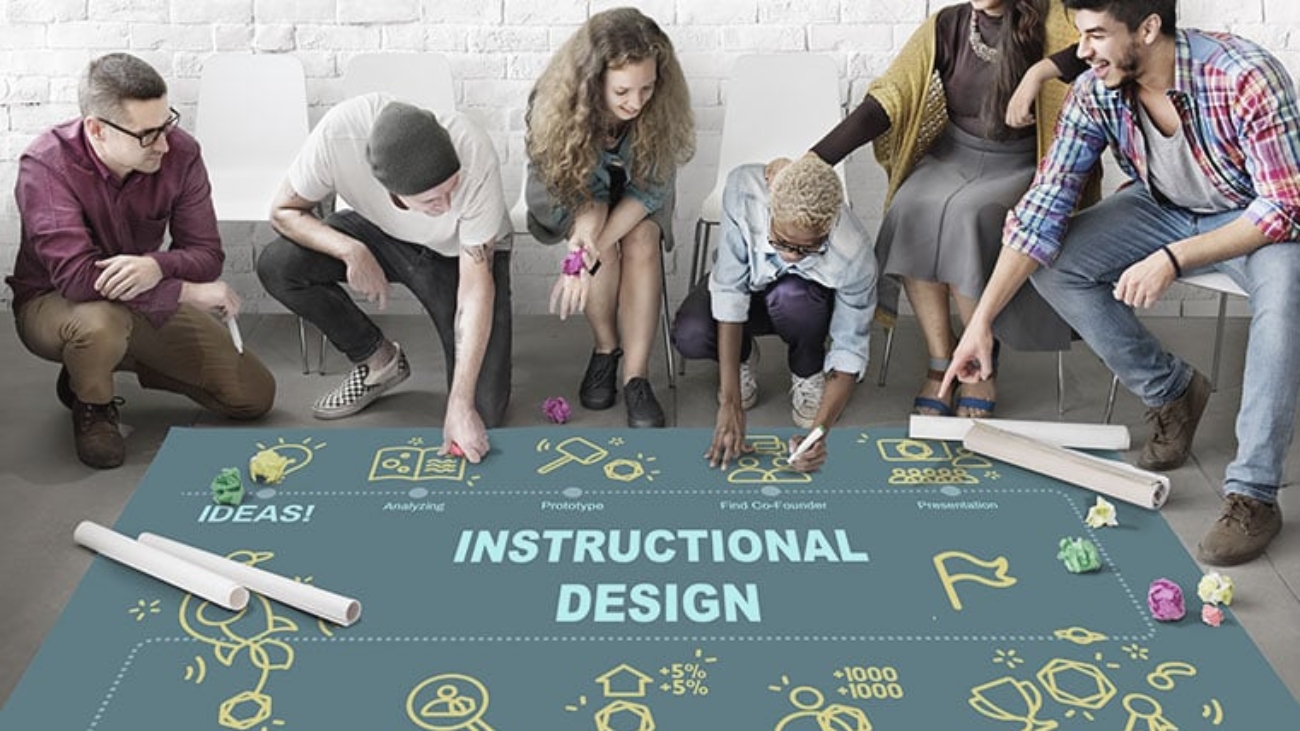
Instructional design trap

More and more companies are choosing eLearning to train their employees and the pandemic context did nothing but to accelerate this trend. Big corporations open up new positions such as instructional designer or eLearning developer and start building in-house eLearning content. Some would say “so, what’s wrong with that?” –  Well, it’s not about being wrong… It’s more about being right.

In traditional training, the trainer also has the role of monitoring the interest and involvement of the participants. They have the ability to adapt content and re-shape delivery. E-Learning, on the other hand, is “flat”; the content must be conceived as relevant and as engaging as possible from the beginning. And here the traps arise!

One of the most common and subtle pitfalls is to start building content by considering the features and tools that the course development software provides instead of considering the effectiveness of the chosen solution. More precisely, the designer builds the content based on the question “what type of interaction (that the software provides) is suitable for this content?” instead of answering the question “what kind of interaction makes the participant experience this content better?”. So, you end up with very nice and engaging content that has very low effectiveness.

In conclusion, as a learning designer, it is better to think first about the learning experience and only then find the most suitable technical solution for it. This way you will develop engaging and effective eLearning content.

Common-Entry-Level-Jobs-in-Cybersecurity

An argument for e-Learning

Nowadays, online courses (e-Learning) have become extremely common, as more and more companies offer online courses and learning platforms. On the other hand, even though online courses are becoming more popular, traditional (classroom) training is struggling and trying to adopt new approaches to keep its partisans close. So, there are two variants to be considered: for some online learning is more appropriate, while others are preferring classroom training.

Let’s make a brief comparison.

The advantages of e-Learning

    • Participants can study anywhere, without restrictions.
    • Topics are easy to choose.
    • Although the interaction with the trainer does not take place in real time (except for live streaming courses), communication is driven in a sustained manner. Participants are in touch with their trainers through social networks, e-mails, SMS, etc.
    • Participants can study even in restricted context, like the current pandemic.
    • It is time saving. So, more time for other activities.
    • It is possible to access only topics of interest, avoiding those that are not relevant.
    • It is much cheaper than classroom learning, it means it is cost effective.
    • No need to travel, so it is safer.

The advantages of classroom training

    • Trainer’s proximity allows participants to ask questions on the spot and get answers in real time.
    • It is a good opportunity to build friendships and consolidate relationships between participants.
    • There is a large variety of activities to be performed in classroom training and the outcome of each exercise can easier be discussed with the participants.
    • It offers greater discipline, generating a group dynamic.

In conclusion, online training, more precisely e-Learning, is a viable alternative for both the employee and the employer. Over 40% of companies say that e-Learning has helped them increase their revenue, and companies that provide training using technology (including e-Learning) have generated higher revenues by over 25% per employee.

Considering all the above and the benefits of online learning, it is clear that e-Learning is absolutely essential nowadays. It is the most effective way to learn and helps organizations create high quality employee training at a lower cost.