

3 pe 2 atlas

Atlas @ work

Your work is not your life.

I remember a manager once telling me that no one is indispensable in the workplace. Many companies believe this, and it’s important for us to internalize this perspective!

Becoming efficient at work may take time, but once you reach that point, you might start feeling like you’re irreplaceable. You could begin to think that the company can’t function properly without you, that your work is crucial, and that the business would suffer without your contribution. This mindset could start affecting your personal life: you might consider skipping holidays or neglecting your family and your own needs.

Remember, you’re just an employee and your work doesn’t define you. Finding fulfillment in doing a good job and being recognized for your efforts should be rewarding in itself. It’s important not to overestimate your own contribution – that would be egocentric bias. Many of your colleagues are working hard and adding value too.

So, don’t fall into the trap of thinking that you are a “one-man show” and that work is everything! Some people argue that life itself is an illusion. Don’t let yourself create an illusion within a bigger illusion. Take the time to appreciate the beauty around you. Enjoy non-work related activities and the company of personal friends. Live your authentic life by doing what truly brings you joy!

Intern and mentor discussing job specific. Latin man in shirt explaining paper details to young blonde colleague. Mentorship concept

First time manager

There is a natural tendency for companies to promote their best performers on the Team Leader position. Because she or he is good, they deserve to become a people manager! That is true; on the other hand, managing people has nothing to do with technical skills …

60% of new managers fail within the first 24 months of their new position according to Gartner’s research. There are different reasons for failing and the line manager plays a major role in it.

If you have a new promoted TL in your team, be generous with the time spent in supporting and developing your TL. The best course of action is to run a development plan with this new TL, covering:

    • new responsibilities – people and business related

    • how time should be used: spending more with the team and less with their own technical tasks

    • skills they need to develop (planning, performance management, delegation, coaching, motivation, recruiting, feedback, people development, etc.) and how to do it

    • what does success look like

Make them understand it is no longer about them and their performance, but rather about their team and its performance.

instructional-design-

Instructional design trap

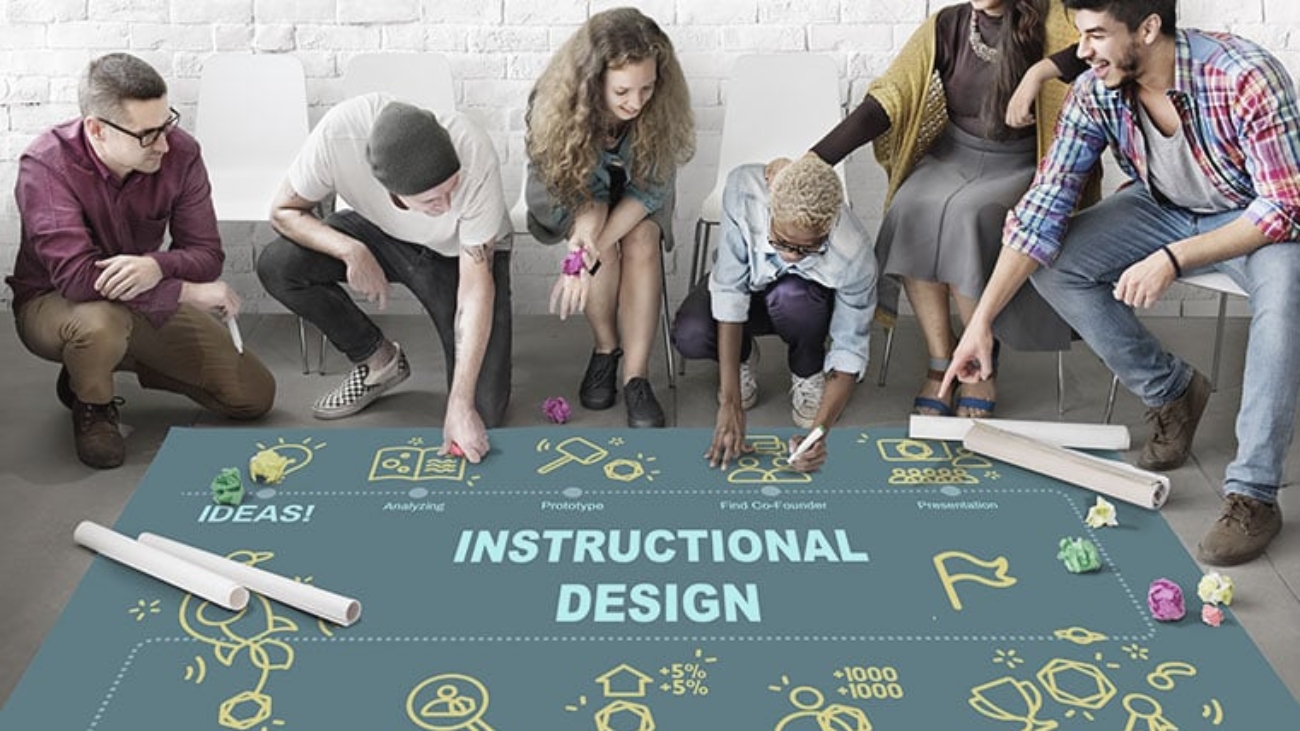
More and more companies are choosing eLearning to train their employees and the pandemic context did nothing but to accelerate this trend. Big corporations open up new positions such as instructional designer or eLearning developer and start building in-house eLearning content. Some would say “so, what’s wrong with that?” –  Well, it’s not about being wrong… It’s more about being right.

In traditional training, the trainer also has the role of monitoring the interest and involvement of the participants. They have the ability to adapt content and re-shape delivery. E-Learning, on the other hand, is “flat”; the content must be conceived as relevant and as engaging as possible from the beginning. And here the traps arise!

One of the most common and subtle pitfalls is to start building content by considering the features and tools that the course development software provides instead of considering the effectiveness of the chosen solution. More precisely, the designer builds the content based on the question “what type of interaction (that the software provides) is suitable for this content?” instead of answering the question “what kind of interaction makes the participant experience this content better?”. So, you end up with very nice and engaging content that has very low effectiveness.

In conclusion, as a learning designer, it is better to think first about the learning experience and only then find the most suitable technical solution for it. This way you will develop engaging and effective eLearning content.

Common-Entry-Level-Jobs-in-Cybersecurity

An argument for e-Learning

Nowadays, online courses (e-Learning) have become extremely common, as more and more companies offer online courses and learning platforms. On the other hand, even though online courses are becoming more popular, traditional (classroom) training is struggling and trying to adopt new approaches to keep its partisans close. So, there are two variants to be considered: for some online learning is more appropriate, while others are preferring classroom training.

Let’s make a brief comparison.

The advantages of e-Learning

    • Participants can study anywhere, without restrictions.
    • Topics are easy to choose.
    • Although the interaction with the trainer does not take place in real time (except for live streaming courses), communication is driven in a sustained manner. Participants are in touch with their trainers through social networks, e-mails, SMS, etc.
    • Participants can study even in restricted context, like the current pandemic.
    • It is time saving. So, more time for other activities.
    • It is possible to access only topics of interest, avoiding those that are not relevant.
    • It is much cheaper than classroom learning, it means it is cost effective.
    • No need to travel, so it is safer.

The advantages of classroom training

    • Trainer’s proximity allows participants to ask questions on the spot and get answers in real time.
    • It is a good opportunity to build friendships and consolidate relationships between participants.
    • There is a large variety of activities to be performed in classroom training and the outcome of each exercise can easier be discussed with the participants.
    • It offers greater discipline, generating a group dynamic.

In conclusion, online training, more precisely e-Learning, is a viable alternative for both the employee and the employer. Over 40% of companies say that e-Learning has helped them increase their revenue, and companies that provide training using technology (including e-Learning) have generated higher revenues by over 25% per employee.

Considering all the above and the benefits of online learning, it is clear that e-Learning is absolutely essential nowadays. It is the most effective way to learn and helps organizations create high quality employee training at a lower cost.

coaching mic

Coaching semblance

“I don’t want a coach! What can an external coach know better than myself about my job, to teach me?” said Cristina, a newly appointed team leader.

Have you heard this type of comment around you? It is pretty common and it usually comes from the diverse coaching experience of the coachee. Coaching may have various meanings and understanding, depending on organizational culture. There are organizations where coaching means using the coach experience to instruct others do their job better. Another meaning of coaching is to have a coach that accompanies the employee in the field (sales environment), observes and gives feedback. I even heard about using “coaching” as an evaluation process: the coach is addressing questions and the coachee has to give the right answer in order to receive a good qualification grade.

Considering the above ways of doing “coaching” it is not surprising that employees are reluctant to it. ICF defines coaching as partnering with clients in a thought-provoking and creative process that inspires them to maximize their personal and professional potential. So, no evaluation, no instruction, no feedback!

To succeed with coaching in a polluted business environment a coach has to start by expressing the main coaching competency: establish trust and intimacy. Only after trust and intimacy is founded the coaching session might be effective.

To find out more about establishing the trust and intimacy competency you can access: https://coachfederation.org/blog/from-the-toolbox-trust-and-intimacy-explained

3 pe 2 clientul nostru

Our customer, our …

“Our customer, our master” (“customer is king” in English) is a phrase that you have certainly heard many times and that you may apply to some extent in the relationship with your customers. But really, what does that literally mean? It means that the sales person, the one who offers the services, is a simple slave or a robot who does anything trying to satisfy its master, the customer. Do you consider that okay?

No, it’s not okay. You don’t want to do all your customer asks you to do!

What can you do instead? Change the motto “Our customer, our master” into “Our customer, our partner”.

Customers trigger our business’ success, so we must show them respect and availability, offer them a pleasant atmosphere and an easy buying process. The customer is important and their satisfaction must be a priority, but in a context of mutual respect. The respectful customer is a business partner who will appreciate not only what you sell but also your involvement. You are the expert of what you sell – a product or a service – and the customer trusts your expertise.

Have you ever seen successful businesses where the customers are doing whatever they want, assuming they are the masters?  On the contrary, those who are successful are sought after by clients who are waiting for the expert’s availability to advise them, and even sit in line to pay.

So, in the customer relationship, respect must be mutual. Be empathetic and treat your customers the way you want them to treat you. If the respect is not mutual, consider a polite separation from it.

3 pe 2 gamification

Gamification aka training redemption

One of the latest trends in training is gamification. More and more companies are trying to revamp training. It is perceived as dusty & outdated so they are looking for new approaches to change this perception and gamification seems to be the solution.

Gamification is cool, it’s outstanding, it’s promising! But does it really solve the problem of training perception? It definitely brings a new breath if done well. Participants  may consider it engaging, interesting and useful. If, on the other hand, the approach is not really inspired, the refreshing effect is missing.

I remember participating in a training program that was presented to us as interesting, with gamification, but which turned out to be a series of 4 debates based on case studies. The gamification consists on receiving a wooden piece of puzzle at the end of each debate with which, after the 4 sessions, we were able to assemble a shape of a product from our portfolio.

 I considered the whole story a masquerade, a kitsch… Besides the fact that I didn’t learn much from those debates, I also end-up with an irrelevant 4-piece wooden puzzle (that I considered a waste)!

If you  really want to introduce gamification as a way of learning, do it intelligently, considering the needs of the participants and the business context.

3 pe 2 we are different

We are different, we learn differently

Why is needed to combine more learning methods in training? What is wrong with traditional methods? And what is wrong with current approaches, such as “experiential training”? Of course, there is nothing wrong with these and each method of learning has its purpose but also its limitations.

It is already recognized that people do not learn only by listening to experts. It is known that from a presentation the participants retain 50% of the information 10 minutes after it, 25% the next day and only 10% after a week. People may find it interesting what an expert says, they may even be determined to apply what they hear, but to put it into practice it takes a lot of energy, will and perseverance. This is also the reason why, although at the end of a in-class training, if the trainer manages to keep the participants attentive and involved, they pass the theoretical test but when it comes to applying what they have learned, it just didn’t happen.

Some say that experiential learning is valuable and leads to the development of skills. This statement is only partially true. Experience does not always lead to learning. Let’s think about the fact that in developed countries, every person eats at least three times a day. Obesity and nutritional diseases are a reality nowadays that show that enough people have not learned how to eat according to their own needs. Another example is money: adults and a good part of children already have experience in walking around with money, passing it through their hands every day. However, few have learned how to use and multiply them effectively. In order to learn from experience, it must have a meaning, to meditate on the experienced, to draw conclusions based on which to act later.

Skills development requires going through a series of learning instances: acquire information, understand it, assimilate it and act accordingly to what have been learned. This is not a linear process but rather a cyclical one. Based on the above conclusions, training and development practices must be multiple, complementary and facilitate the learning process. It is not difficult to combine various training methods but to choose the right ones for each person depending on his needs and context.

online

Is on-line training really viable?

After almost one year of pandemic conditions, people got used to working from home and to limiting physical interactions with others. For a company, adapting to the new social reality implies not only to protect the employees by working from home but also to change the business strategy and to revise the priorities. So the training, that never has been a priority for most of the companies, becomes a “nice to have but not now” activity. 

In this environment, most of the training suppliers on the local market rushed-up to show they are viable and active; plenty of so called “free on-line training sessions” were organized. Unfortunately, most of these on-line training sessions proved to be a kind of webinar where a tutor is speaking over a PowerPoint presentation and the participants are simply listening. I said “unfortunately” because participants learned that an on-line training has to be this way.

In actuality, on-line training should be interactive; participants should be able to talk and activities should be part of the training. Is that possible? Of course it is. First of all by keeping in mind when designing the training that the participants will not be next to each other during the session. Secondly, by choosing the appropriate communication platform that provides video, chat, break rooms, a whiteboard, polls, sharing options and other tools to facilitate on-line interactions. And last but not least by adapting the pace of the delivery to on-line specifically, using rather micro-sessions and frequent breaks instead of a daylong session.

But a question is still to be answered:  how can we redefine people’s perception?


3 pe 2 pandemic per

Training as a challenge during the pandemic

In pandemic times like these, some of the companies are looking for training on virtual team management (93%) and crisis leadership (84%) while 62% of them will drop out post-crisis webinars, according to a Bittnet Training and Equatorial study. While most of the training sessions are on-line, there are some that are still delivered face to face, in class. After having some of those face-to face sesions we are glad to share with you tips on how to keep the participants safe:

What to do before training starts:

Communications and training invitations should always include a reminder of the potential signs of the new coronavirus infections and instruct participants. As an extra precaution, take the temperature of the participants prior to the training. Make participants feel safe and actively participate by ensuring a welcoming venue with clean air and disinfected desks placed at recommended distance. Provide a dispenser with alcohol-based disinfectant – min. 60% – and wet wipes (to clean the objects). If you want to take advantage of the topic and make the training more attractive, you can bring personalized masks with funny messages or images for the participants to choose from.

What to do during the training:

  • make sure that all participants wear the protective mask correctly while they are in the room
  • play games that facilitate hand  disinfection regularly
  • if possible, do outdoor activities
  • choose activities that avoid physical contact and maximize nonverbal communication
  • mark the positions to highlight the distance between participants during  activities
  • encourage participants to bring their own stationary
  • take breaks more frequently – recommended after 1 hour, and ventilate the meeting room
  • organize coffee & lunch breaks on the terrace (or outside)