

instructional-design-

Instructional design trap

More and more companies are choosing eLearning to train their employees and the pandemic context did nothing but to accelerate this trend. Big corporations open up new positions such as instructional designer or eLearning developer and start building in-house eLearning content. Some would say “so, what’s wrong with that?” –  Well, it’s not about being wrong… It’s more about being right.

In traditional training, the trainer also has the role of monitoring the interest and involvement of the participants. They have the ability to adapt content and re-shape delivery. E-Learning, on the other hand, is “flat”; the content must be conceived as relevant and as engaging as possible from the beginning. And here the traps arise!

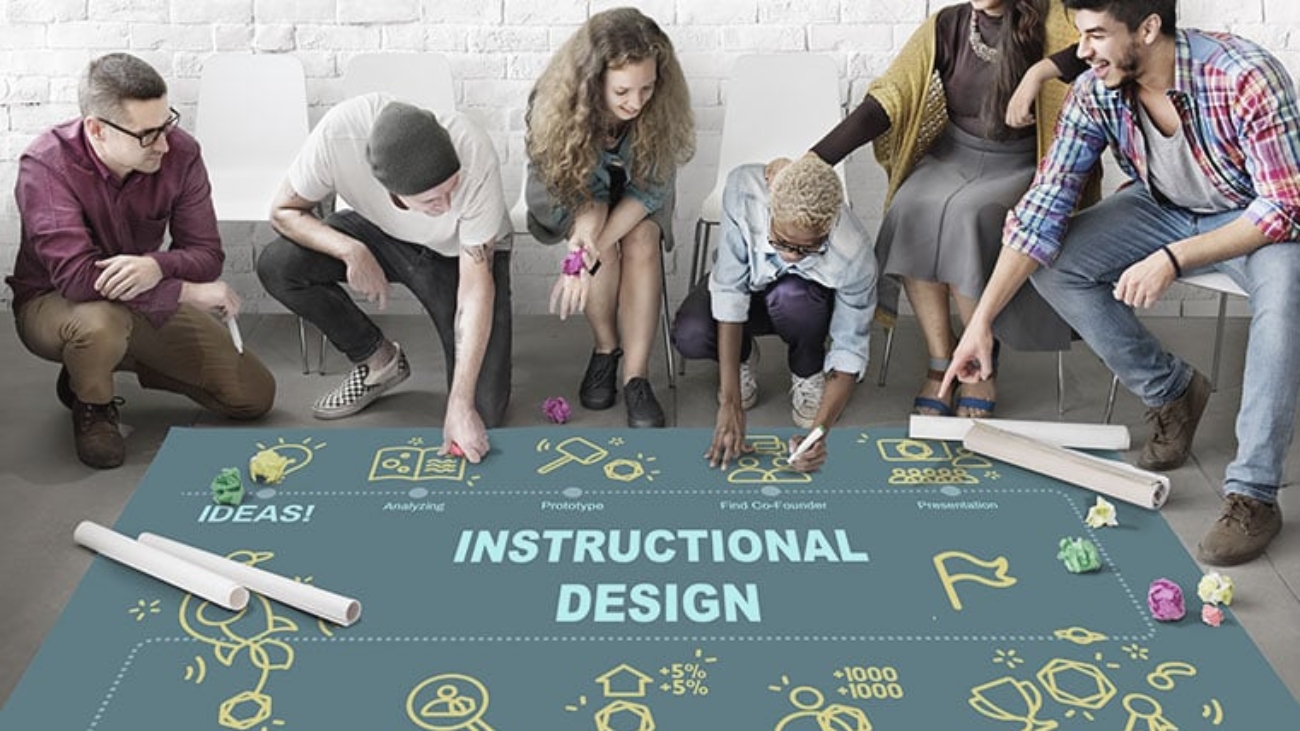
One of the most common and subtle pitfalls is to start building content by considering the features and tools that the course development software provides instead of considering the effectiveness of the chosen solution. More precisely, the designer builds the content based on the question “what type of interaction (that the software provides) is suitable for this content?” instead of answering the question “what kind of interaction makes the participant experience this content better?”. So, you end up with very nice and engaging content that has very low effectiveness.

In conclusion, as a learning designer, it is better to think first about the learning experience and only then find the most suitable technical solution for it. This way you will develop engaging and effective eLearning content.


3 pe 2 gamification

Gamification aka training redemption

One of the latest trends in training is gamification. More and more companies are trying to revamp training. It is perceived as dusty & outdated so they are looking for new approaches to change this perception and gamification seems to be the solution.

Gamification is cool, it’s outstanding, it’s promising! But does it really solve the problem of training perception? It definitely brings a new breath if done well. Participants  may consider it engaging, interesting and useful. If, on the other hand, the approach is not really inspired, the refreshing effect is missing.

I remember participating in a training program that was presented to us as interesting, with gamification, but which turned out to be a series of 4 debates based on case studies. The gamification consists on receiving a wooden piece of puzzle at the end of each debate with which, after the 4 sessions, we were able to assemble a shape of a product from our portfolio.

 I considered the whole story a masquerade, a kitsch… Besides the fact that I didn’t learn much from those debates, I also end-up with an irrelevant 4-piece wooden puzzle (that I considered a waste)!

If you  really want to introduce gamification as a way of learning, do it intelligently, considering the needs of the participants and the business context.

3 pe 2 we are different

We are different, we learn differently

Why is needed to combine more learning methods in training? What is wrong with traditional methods? And what is wrong with current approaches, such as “experiential training”? Of course, there is nothing wrong with these and each method of learning has its purpose but also its limitations.

It is already recognized that people do not learn only by listening to experts. It is known that from a presentation the participants retain 50% of the information 10 minutes after it, 25% the next day and only 10% after a week. People may find it interesting what an expert says, they may even be determined to apply what they hear, but to put it into practice it takes a lot of energy, will and perseverance. This is also the reason why, although at the end of a in-class training, if the trainer manages to keep the participants attentive and involved, they pass the theoretical test but when it comes to applying what they have learned, it just didn’t happen.

Some say that experiential learning is valuable and leads to the development of skills. This statement is only partially true. Experience does not always lead to learning. Let’s think about the fact that in developed countries, every person eats at least three times a day. Obesity and nutritional diseases are a reality nowadays that show that enough people have not learned how to eat according to their own needs. Another example is money: adults and a good part of children already have experience in walking around with money, passing it through their hands every day. However, few have learned how to use and multiply them effectively. In order to learn from experience, it must have a meaning, to meditate on the experienced, to draw conclusions based on which to act later.

Skills development requires going through a series of learning instances: acquire information, understand it, assimilate it and act accordingly to what have been learned. This is not a linear process but rather a cyclical one. Based on the above conclusions, training and development practices must be multiple, complementary and facilitate the learning process. It is not difficult to combine various training methods but to choose the right ones for each person depending on his needs and context.

3 pe 2 pandemic per

Training as a challenge during the pandemic

In pandemic times like these, some of the companies are looking for training on virtual team management (93%) and crisis leadership (84%) while 62% of them will drop out post-crisis webinars, according to a Bittnet Training and Equatorial study. While most of the training sessions are on-line, there are some that are still delivered face to face, in class. After having some of those face-to face sesions we are glad to share with you tips on how to keep the participants safe:

What to do before training starts:

Communications and training invitations should always include a reminder of the potential signs of the new coronavirus infections and instruct participants. As an extra precaution, take the temperature of the participants prior to the training. Make participants feel safe and actively participate by ensuring a welcoming venue with clean air and disinfected desks placed at recommended distance. Provide a dispenser with alcohol-based disinfectant – min. 60% – and wet wipes (to clean the objects). If you want to take advantage of the topic and make the training more attractive, you can bring personalized masks with funny messages or images for the participants to choose from.

What to do during the training:

  • make sure that all participants wear the protective mask correctly while they are in the room
  • play games that facilitate hand  disinfection regularly
  • if possible, do outdoor activities
  • choose activities that avoid physical contact and maximize nonverbal communication
  • mark the positions to highlight the distance between participants during  activities
  • encourage participants to bring their own stationary
  • take breaks more frequently – recommended after 1 hour, and ventilate the meeting room
  • organize coffee & lunch breaks on the terrace (or outside)